


Finding quality manufacturing is key, and understanding how many sewing lines in garment factories impacts your order's potential. Get a free quote today.
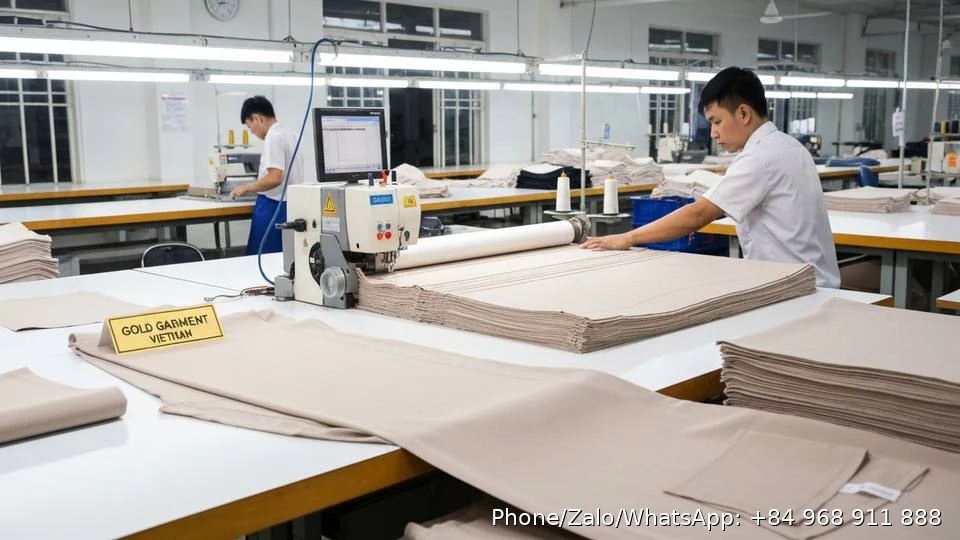
For international buyers sourcing apparel, understanding a factory's infrastructure goes far beyond simply knowing its address. One of the most critical indicators of a manufacturer's true capabilities, particularly concerning capacity, lead time, and scalability, is the number and setup of its sewing lines. When you ask how many sewing lines in garment production a factory operates, you're essentially inquiring about its engine room – the core of its manufacturing strength.
At Gold Garment Vietnam, we understand that this question isn't just about a raw number; it's about what that number means for your business. It reflects the potential for high-volume production, efficient order fulfillment, and the flexibility to meet diverse product requirements. This guide will delve into what sewing lines represent for your sourcing strategy and how a well-structured manufacturing partner like Gold Garment leverages them to deliver exceptional results.
Deciphering Garment Production Capacity Through Sewing Lines
A sewing line, at its most fundamental, is an organized sequence of workstations, each equipped with specialized sewing machines and skilled operators, designed to complete a specific garment style efficiently. The total number of operational sewing lines directly correlates with a factory's overall garment production capacity. More lines generally mean a higher potential for simultaneous projects or larger production runs.
However, it's not just a simple matter of counting. The actual output from these lines depends on several factors:
- Garment Complexity: A simple T-shirt requires fewer operations and can move through a line much faster than a complex jacket or tailored dress shirt.
- Machine Specialization: Lines might be configured for specific fabric types (knits vs. wovens) or garment categories (activewear, denim, outerwear).
- Operator Skill and Training: Highly skilled and well-trained operators can maintain consistent quality and higher output rates.
- Line Balancing: The efficiency of a sewing line is often determined by how well the workflow is balanced, ensuring no single workstation becomes a bottleneck.
For Gold Garment Vietnam, our infrastructure is built to support a robust factory production volume across a wide range of custom cut-and-sew garments. We dynamically allocate our lines based on order size, garment complexity, and required lead times, ensuring optimal utilization and efficient output for our international clients.
How Sewing Line Allocation Influences Your Apparel Manufacturing Lead Time
When you place a bulk order, one of your primary concerns is undoubtedly the apparel manufacturing lead time. The number of available sewing lines, and how a factory manages their allocation, plays a critical role here. A factory with a limited number of lines might have significant backlogs, leading to longer wait times for your production slot.
Conversely, a manufacturer with ample and flexible sewing lines can more effectively manage multiple projects, reducing the queue time for new orders. At Gold Garment, our operational model allows us to dedicate specific lines or portions of lines to various projects, which helps us maintain our competitive bulk lead time of 30-45 days after sample approval. This agility in line management is crucial for meeting demanding market schedules in the USA, Europe, Australia, and beyond.
For buyers, understanding a factory's lead time isn't just about the stated number of days; it's also about the transparency of their scheduling and their ability to honor commitments, which is often a direct reflection of their capacity and line management strategy.
Scaling Your Brand: Clothing Factory Scalability and High Volume Orders
As your brand grows, your production needs will likely increase. This is where clothing factory scalability becomes a critical factor. Partnering with a manufacturer that has a robust number of sewing lines and the operational flexibility to scale up production is vital for long-term success. A manufacturer that can quickly ramp up production without compromising quality or increasing lead times significantly is invaluable.
Gold Garment Vietnam, while maintaining a flexible MOQ from 50 pieces per style per color, is equipped to serve as a high volume garment supplier. Our infrastructure and skilled workforce are capable of handling substantial bulk clothing order capabilities. This means that whether you're starting with a moderate initial order or planning for large-scale seasonal collections, we have the capacity to grow with your brand.
Our ability to adjust production volumes and allocate resources efficiently across our sewing lines means we can support your growth trajectory, helping you capture larger market shares and respond quickly to consumer demand without the need to switch manufacturers as your order sizes increase.
The Strategic Advantage of Multiple Sewing Lines for Textile Production Line Efficiency
Beyond sheer numbers, the strategic organization and specialization of sewing lines significantly impact textile production line efficiency. A factory that can dedicate lines to specific types of garments or fabric constructions often achieves higher quality and faster production for those items.
- Fabric Specialization: Some lines might be optimized for delicate knits like cotton, organic cotton, or recycled polyester, while others are set up for woven fabrics or heavier materials. This specialization ensures the correct machines, needles, and operators are always in place.
- Garment Category Focus: Dedicated lines for activewear, casual wear, or specialized uniforms can streamline processes unique to those categories, from technical performance fabric handling to specific seam finishes.
- Branding Integration: With full-package OEM and ODM production, lines can be integrated with specific branding capabilities such as embroidery, screen printing, heat transfer, or sublimation stations, ensuring a seamless flow from cut fabric to finished, branded garment.
Gold Garment’s setup allows for such specialization, optimizing each stage of our custom cut-and-sew production. This not only enhances efficiency but also minimizes errors and improves the overall quality of the final product, from XS to 4XL, with custom size grading for US/EU/AU standards.
Ensuring Quality Management Across Diverse Sewing Line Operations
When discussing how many sewing lines in garment factories are ideal, it's crucial to consider how quality is maintained across potentially numerous parallel operations. A large number of lines without stringent quality control can lead to inconsistencies. At Gold Garment Vietnam, our commitment to quality is paramount, regardless of the scale of production.
We implement ISO-aligned quality management systems and are a BSCI-compliant factory. This means:
- In-line Quality Checks: Our quality control personnel perform regular inspections at various stages along each sewing line, catching and correcting issues as they arise, rather than waiting for the final inspection.
- Standardized Operating Procedures (SOPs): Each line follows detailed SOPs for every garment style, ensuring consistency in stitching, measurements, and finishing across all units.
- Continuous Training: Operators receive ongoing training to maintain skill levels and adapt to new styles and fabric types, ensuring high standards are met on every line.
- Final Audit: Before packing, every garment undergoes a comprehensive final audit to confirm it meets all specifications and quality benchmarks.
This multi-layered approach to quality assurance ensures that every item produced on every sewing line meets the high standards expected by our international buyers.
Gold Garment's Commitment to Optimized Sewing Lines and Bulk Clothing Order Capabilities
At Gold Garment Vietnam, our understanding of how many sewing lines in garment production relates to buyer needs is at the core of our operations. We maintain a flexible and robust sewing line infrastructure, specifically designed to support the diverse requirements of our clients across the USA, Europe, Australia, UK, Canada, and the Middle East.
Our commitment extends beyond just having a certain number of lines; it's about how we utilize them:
- Adaptability: Our lines can be quickly reconfigured to handle different garment types, from basic tees to complex outerwear, utilizing a wide range of fabrics like cotton, polyester, organic cotton, recycled polyester, and technical performance fabrics.
- Efficiency Focus: We continuously invest in modern machinery and lean manufacturing principles to maximize the output and precision of each line, enhancing our bulk clothing order capabilities.
- Client-Centric Scheduling: We prioritize clear communication and realistic scheduling to manage expectations regarding lead times, ensuring your orders are processed efficiently and delivered on time.
By leveraging our optimized sewing lines, Gold Garment stands as a reliable partner capable of delivering high-quality, custom garments with precision and efficiency, meeting both small-batch and large-scale demands.
Frequently Asked Questions
How does the number of sewing lines impact my order's lead time?
A higher number of sewing lines generally allows a factory to manage more concurrent projects or allocate dedicated lines for larger orders, which can significantly reduce the overall queue time and accelerate your apparel manufacturing lead time. It means less waiting for an available production slot.
Can a factory with fewer sewing lines still handle large orders?
While a factory with fewer lines might handle large orders by dedicating all its capacity to one project, this often comes with longer lead times and less flexibility for multiple clients. Factories with more lines offer better scalability and typically higher garment production capacity, allowing them to manage large orders more efficiently alongside other commitments.
What's the ideal number of sewing lines for diverse garment types?
There isn't a single "ideal" number, as it depends on the factory's specialization and operational model. However, a factory capable of handling diverse garment types efficiently typically has a sufficient number of lines to allow for specialization (e.g., dedicated lines for knits vs. wovens) and flexibility in reconfiguring for new styles, enhancing textile production line efficiency for various products.
How do Gold Garment ensure consistent quality across multiple sewing lines?
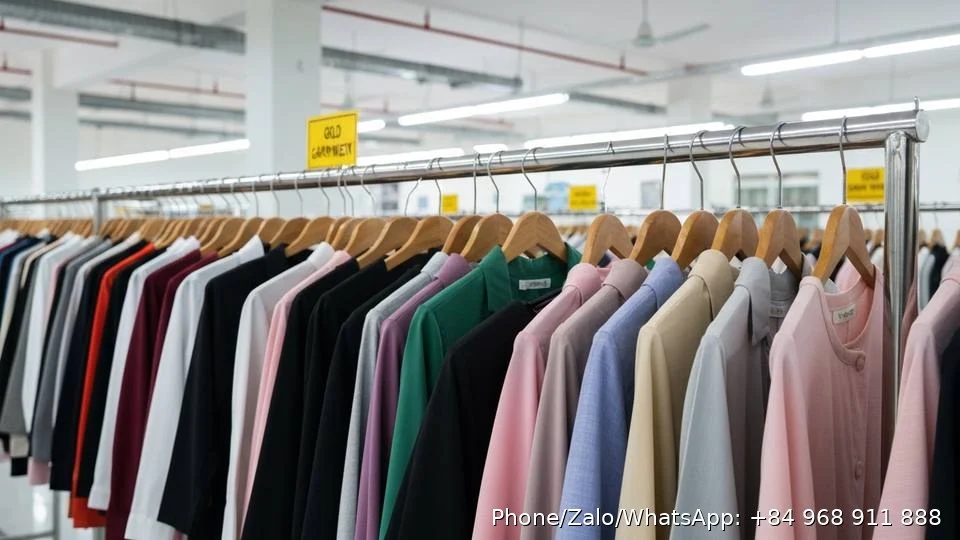
At Gold Garment, we ensure consistent quality through ISO-aligned quality management systems, BSCI compliance, rigorous in-line quality checks, standardized operating procedures for all lines, continuous operator training, and a comprehensive final audit before dispatch. This multi-stage approach guarantees uniformity regardless of which sewing line produces your garments.
Ready to get started? Send us your specifications and we will respond with a detailed quote within 24 hours. Contact Gold Garment — no obligation.


