


Custom newborn dresses crafted by experienced new born baby dress manufacturers in Vietnam. Get a free quote today.
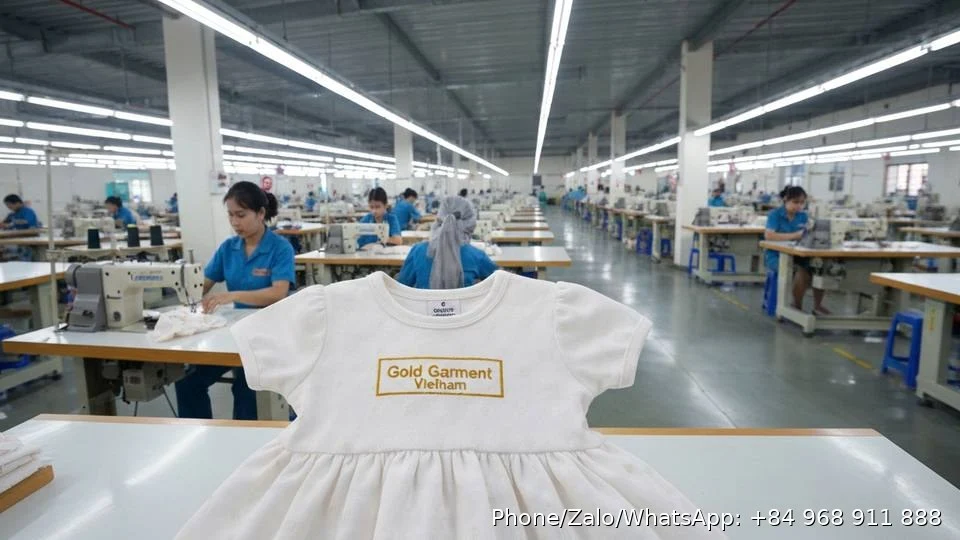
For brands and retailers entering the delicate world of infant apparel, partnering with a knowledgeable manufacturer is paramount. The production of newborn baby dresses demands precision, an unwavering commitment to safety, and an understanding of the unique needs of the youngest consumers. At Gold Garment Vietnam, we specialize in full-package OEM and ODM production, offering a comprehensive guide to what makes a truly exceptional newborn baby dress, ensuring comfort, durability, and brand integrity for buyers seeking high-quality new born baby dress manufacturers and reliable baby clothes wholesale solutions.
As a leading garment manufacturer based in Ho Chi Minh City, Vietnam, Gold Garment provides expert services for custom infant apparel, blending superior craftsmanship with ethical production practices. Our capabilities extend from design consultation and material sourcing to precise manufacturing and stringent quality control, making us your ideal partner for private label babywear.
Crafting Comfort: Technical Construction for Infant Dresses
The technical construction of a newborn baby dress is critical, prioritizing the baby's delicate skin and the parents' ease of use. Every seam, panel, and closure must be designed with ultimate comfort and safety in mind. Unlike adult garments, there is zero tolerance for irritation or potential hazards.
- Seams: For newborn wear, the type of seam is paramount. We primarily utilize flatlock seams (often known as merrow stitching) or fully enclosed seams. Flatlock seams create a smooth, flat join that eliminates bulky edges, preventing chafing or discomfort against sensitive skin. Alternatively, French seams or bound seams completely enclose raw edges, offering a clean finish that is both durable and soft. Exposed raw edges are strictly avoided in newborn garment production.
- Panels: Designs typically feature minimalist paneling to reduce the number of seams. Simple A-line silhouettes, gathered skirts attached to a soft bodice, or empire-waist designs are common. The aim is to create a garment that allows maximum freedom of movement without restriction. More complex designs might incorporate gentle smocking or subtle pleats, always ensuring the fabric remains soft and flexible.
- Closures: Security and ease of dressing are key. Snap buttons are the most common and preferred closure for newborn dresses, particularly nickel-free, plastic-coated snaps that lie flat. They are strategically placed at the back neck, shoulder, or along a crotch placket for effortless diaper changes without needing to fully undress the baby. Buttons are generally avoided for newborns due to choking hazards; if used, they must be very large, securely stitched with reinforced backing, and pass pull-tests. Zippers are typically not recommended for newborn dresses unless they are fully protected with plackets and positioned away from direct skin contact. Soft, flat ties may be used, but must be short and securely stitched to prevent entanglement.
- Fit Considerations: Newborn dresses must offer a loose, non-restrictive fit. Necklines are designed to be wide enough for easy head passage, often aided by snaps at the shoulder or back. Armholes are cut generously to prevent rubbing, and the overall silhouette provides ample room for movement and layering without feeling bulky. Crucially, the fit must accommodate diapers comfortably without digging in or riding up.
Selecting the Softest: Fabric Options for Newborn Attire
The choice of fabric for newborn baby dresses is arguably the most important decision, directly impacting comfort, breathability, and safety. At Gold Garment Vietnam, we guide our clients through an extensive range of materials, always prioritizing hypoallergenic, soft, and durable options for private label babywear and custom infant apparel.
- Key Fabric Characteristics: Fabrics must be breathable to regulate body temperature, exceptionally soft against sensitive skin, absorbent, and durable enough to withstand frequent washing. Hypoallergenic properties are also a major consideration.
- Preferred Fiber Content:
- Organic Cotton: This is a top choice for many brands, especially those focusing on sustainable and eco-conscious collections. As an experienced organic baby clothing supplier, Gold Garment sources certified organic cotton, ensuring it is free from harmful chemicals, pesticides, and synthetic fertilizers. It's incredibly soft, breathable, and gentle.
- Pima Cotton/Supima Cotton: Known for its extra-long staple fibers, Pima or Supima cotton offers superior softness, strength, and resistance to pilling, making it a luxurious and durable option for premium newborn garments.
- Bamboo Viscose: An excellent choice for its exceptional softness, silky drape, and natural moisture-wicking properties. Bamboo viscose is also naturally thermo-regulating, keeping babies comfortable in various climates.
- Modal: A type of rayon made from beechwood pulp, Modal is renowned for its extreme softness, smoothness, and resistance to shrinkage and fading. It drapes beautifully and feels light against the skin.
- Blends: We often work with cotton-spandex blends (e.g., 95% cotton, 5% spandex) to introduce a touch of stretch for comfort and shape retention without compromising the natural feel. Cotton-bamboo blends combine the best properties of both fibers.
- Fabric Types and GSM Ranges:
- Single Jersey: The most common knit fabric for baby clothing, typically ranging from 120-180 GSM. It's lightweight, stretchy, and highly breathable.
- Interlock Knit: A double-knit fabric that is thicker, more stable, and offers a softer handfeel than single jersey. Ideal for slightly cooler weather, with GSMs typically between 180-220.
- Rib Knit: Characterized by vertical ribs, this fabric offers excellent stretch and recovery, making it suitable for snug but comfortable items or for details like neckbands and cuffs. GSM often ranges from 160-200.
- Lightweight French Terry: With soft loops on the inside, light French terry (200-240 GSM) provides a bit more warmth while maintaining breathability and comfort.
- Finishing Options: Fabrics are often pre-washed and pre-shrunk to minimize shrinkage after purchase. We ensure all dyes and finishes used are OEKO-TEX certified, guaranteeing they are free from harmful substances.
Branding & Beyond: Decoration Techniques for Babywear
Branding and decoration on newborn baby dresses require careful consideration of safety, durability, and a soft handfeel. Gold Garment, as experienced new born baby dress manufacturers, employs techniques that prioritize the baby’s comfort while effectively conveying your brand identity.
- Safety First: All decoration methods must use non-toxic, baby-safe materials. Crucially, any appliqués, patches, or embellishments must be securely attached to prevent them from becoming choking hazards. Small, detachable parts are strictly prohibited.
- Print Methods:
- Water-Based Screen Printing: This is a preferred method for infant wear due to its soft handfeel and breathability. Water-based inks soak into the fabric rather than sitting on top, resulting in a print that moves and feels like part of the garment, without cracking or peeling.
- Discharge Printing: For darker fabrics, discharge printing removes the original dye from the fabric before applying the new color. This technique results in a print that has virtually no handfeel, making it exceptionally soft and comfortable for babies.
- Eco-Friendly Heat Transfer: While traditionally heat transfers can be stiff, advancements in eco-friendly, soft-touch heat transfers allow for intricate, multi-color designs with a much softer feel. These are often used for care labels or small, detailed graphics. Durability and non-peeling properties are rigorously tested.
- Sublimation: Primarily used on polyester or high-polyester blend fabrics, sublimation produces vibrant, all-over prints that become part of the fabric itself, offering a "no-feel" decoration. If using this, we ensure the fabric composition is suitable for babywear.
- Embroidery: Embroidery can add a premium, textured look. However, for newborn garments, it requires specific attention:
- Soft Backing: A soft, tear-away or heat-seal backing is always applied to the reverse side of the embroidery to prevent the stitches from irritating the baby's skin.
- Simple Designs: Designs should be simple, avoiding dense, heavy stitching or sharp edges.
- Placement: Embroidery is strategically placed away from high-friction areas or direct skin contact points.
- Labels:
- Printed Neck Labels: These are the gold standard for newborn apparel. Printed directly onto the fabric, they eliminate the scratchiness of woven labels at the neck, which is crucial for sensitive skin. This is a common request for private label babywear.
- Woven Labels (External): If woven labels are desired for a premium look, they are typically sewn onto an outer seam (like a side seam or hem) or as an external branding tag, away from direct contact with the baby's skin.
- Hang Tags: Essential for branding and product information, hang tags are attached with soft string or a plastic barb and are designed to be removed by the consumer before dressing the baby.
- Gold Garment ensures that all branding and decoration for your newborn garment production adheres to international safety standards and delivers on both aesthetics and comfort.
Precision Sizing: Grading & Fit Standards for Infant Dresses
Sizing newborn baby dresses presents a unique challenge due to the rapid growth of infants and the need for a comfortable, non-restrictive fit across various body types. Accurate size grading is crucial for successful baby clothes wholesale operations and for brands building a reputation for reliable fit. As custom infant apparel specialists, Gold Garment has extensive experience in meeting diverse international sizing standards.
- Challenges in Infant Sizing: Babies grow at an incredibly fast pace, and their proportions change significantly in the first year. A "0-3 month" size must comfortably fit a baby at the younger end and still be usable for one approaching the 3-month mark. This requires generous ease allowances without making the garment look ill-fitting or excessively bulky.
- Standard Sizing Systems:
- US Sizes: Typically age-based (e.g., Newborn, 0-3M, 3-6M, 6-9M, 9-12M, 12-18M, 18-24M). These are often accompanied by corresponding weight and height ranges, which are more precise indicators.
- EU Sizes: Primarily based on the baby's total height in centimeters (e.g., 50cm, 56cm, 62cm, 68cm, 74cm, 80cm, 86cm). This system offers a more objective measurement.
- AU Sizes: Often similar to US sizing, age-based with categories like 0000 (Newborn), 000 (0-3M), 00 (3-6M), 0 (6-12M), etc.
- UK Sizes: Also typically age-based.
- Gold Garment's Expertise in Custom Grading: We work closely with brands to establish precise size charts tailored to their specific market and brand philosophy. Our technical teams apply meticulous grading rules, ensuring that each size scales appropriately in all key dimensions – chest circumference, dress length from shoulder to hem, neck opening, and any sleeve lengths. We factor in ample ease for comfort, movement, and accommodating diapers without restricting growth. Whether you require specific US, EU, or AU standards, our custom size grading ensures your custom infant apparel perfectly fits your target demographic. Our commitment to low MOQ baby clothing means even emerging brands can access this specialized grading expertise.
- Fit Philosophy for Newborns: The primary goal is a loose, generous fit. Key measurements are carefully balanced to ensure dresses are easy to put on and take off, provide unrestricted limb movement, and offer adequate room for a diaper without discomfort. Neck openings are designed to pass easily over the head, often with snap plackets for added convenience.
From Sample to Scale: Production Journey for Baby Apparel
The journey from a design concept to thousands of finished newborn baby dresses is a meticulous process, especially when partnering with a reliable baby clothes OEM factory. At Gold Garment Vietnam, our structured approach ensures consistency, quality, and efficiency from sampling through bulk production.
- The Sampling Stage: This critical phase allows clients to approve every detail before mass production.
- Proto Sample: The initial sample, made according to the tech pack, serves to confirm the design concept, fit, and overall aesthetic.
- Fit Sample: Refinements are made based on the proto sample. This sample is crucial for checking the garment's comfort, movement, and fit on a newborn mannequin or live model, ensuring all construction details are baby-safe.
- PP Sample (Pre-Production Sample): This is the final, approved sample. It must be an exact replica of what the bulk production will be, incorporating the approved fabric, trims, colors, labels, and all branding elements. Bulk production only commences after the PP sample receives explicit client approval. Gold Garment delivers samples within 10-14 days, providing quick turnaround for essential approvals.
- Pre-Production Meeting: Once the PP sample is approved, Gold Garment conducts an internal pre-production meeting involving all relevant departments – pattern making, cutting, sewing, printing/embroidery, and quality control. This ensures everyone is aligned on the exact specifications, potential challenges, and quality benchmarks for your newborn garment production.
- Bulk Production:
- Fabric Sourcing and Inspection: Approved fabrics, including organic options for organic baby clothing supplier needs, are meticulously sourced. Upon arrival, they undergo strict inspection for quality, color consistency, GSM, and any flaws before cutting.
- Cutting: Fabrics are precisely cut using advanced machinery to minimize waste, supporting sustainable baby clothes manufacturer practices. Patterns are carefully laid out to ensure grain lines are correct and fabric stretch is utilized optimally.
- Sewing: Our skilled operators, experienced in handling delicate fabrics and specialized seams for infant wear, utilize appropriate industrial sewing machines. Attention to detail is paramount for seam integrity, stitch consistency, and the secure attachment of all closures and labels.
- Decoration Application: Any prints or embroidery are applied at this stage, followed by necessary curing or soft backing procedures to ensure durability and comfort.
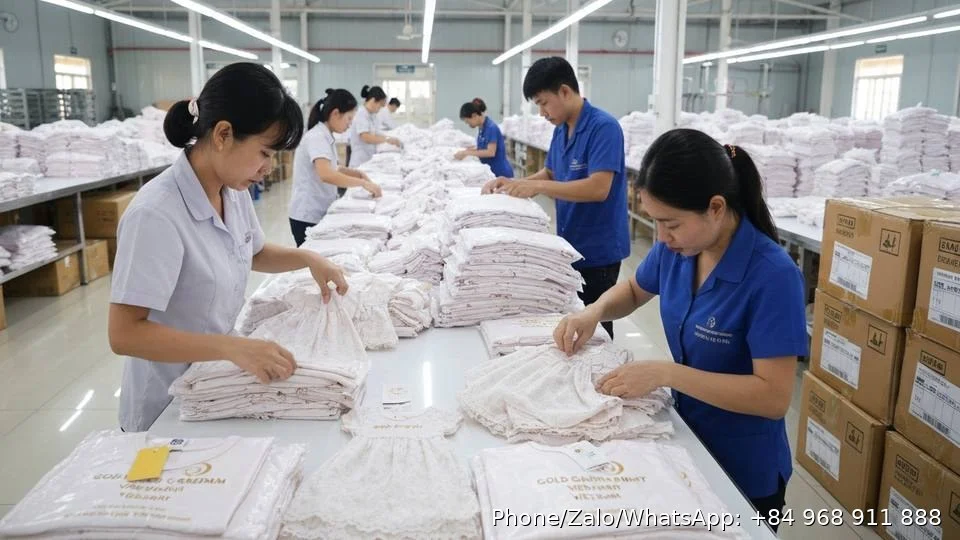
- Finishing: This includes thorough thread trimming, garment pressing, folding, and packaging according to client specifications. Each garment is meticulously checked for cleanliness and presentation.
- The transition from sample to bulk production at Gold Garment's baby clothes OEM factory is managed with rigorous oversight, ensuring that every garment meets the approved standard and client expectations, all within our efficient 30-45 day bulk lead time after sample approval.
Ensuring Excellence: Quality Control for Newborn Garments
Quality control for newborn baby dresses is not just about meeting specifications; it's about guaranteeing the absolute safety and comfort of an extremely vulnerable consumer. At Gold Garment Vietnam, our comprehensive quality control system, aligned with ISO standards and backed by our BSCI compliance, ensures every garment is perfect.
- Critical Importance of QC: Newborn clothing must be free from any potential hazards – no sharp edges, no small detachable parts, no irritants, and no strangulation risks (e.g., drawstrings are prohibited on newborn items). Consistency in fit and material quality is also vital for brand reputation.
- Key Quality Control Checkpoints:
- Fabric Inspection (IQC): Upon receiving fabric, our IQC team inspects for flaws, color consistency, weight (GSM), shrinkage properties, and overall handfeel. For organic materials, certifications (e.g., GOTS, OEKO-TEX) are verified. This pre-production check prevents faulty materials from entering the manufacturing process.
- In-Process QC (IPQC): During sewing, supervisors and dedicated QC personnel monitor production lines. Checks include:
- Seam Integrity and Stitching: Ensuring consistent stitch length, correct tension, and strong, flat seams without loose threads.
- Closure Security: All snaps, buttons (if used), and other closures are rigorously pull-tested to ensure they are securely attached and will not detach. Nickel-free status of snaps is verified.
- Label Placement: Correct positioning and secure attachment of all internal and external labels, ensuring printed labels are smooth against the skin.
- Thread Trimming: Regular checks to ensure all excess threads are trimmed throughout the sewing process.
- Print/Embroidery QC: Decorations are inspected for accurate color, sharp registration, correct placement, durability, and the presence of soft backing for embroidery to prevent skin irritation.
- Garment Dimensions & Measurement Checks: After sewing, garments are measured against the approved spec sheet to ensure consistent sizing and proper grading. This includes checking key points like chest, length, and neck opening. Shrinkage tests are conducted post-wash.
- Final Inspection (AQL): Before packing, a final random inspection is conducted based on agreed Acceptance Quality Limit (AQL) levels (e.g., AQL 2.5 or 4.0). This comprehensive check covers overall appearance, workmanship, garment dimensions, labeling, packaging, and specific defect types (major, minor, critical) to ensure total compliance and client satisfaction for all newborn garment production.
- Safety Compliance Audit: A final safety audit ensures the garment complies with international safety standards, confirming no small parts, strangulation hazards, or sharp elements are present.
Frequently Asked Questions
What is the minimum order quantity (MOQ) for new born baby dresses?
Gold Garment offers a competitive MOQ starting from 50 pieces per style per color. This flexibility is designed to support both established brands and emerging businesses looking for baby clothes wholesale opportunities or launching new private label babywear collections.
Can Gold Garment provide organic cotton for infant wear?
Yes, absolutely. As an experienced organic baby clothing supplier, we prioritize sourcing certified organic cotton and other sustainable fabrics. We ensure full traceability and compliance with relevant organic standards to meet your sustainable baby clothes manufacturer needs, offering peace of mind regarding environmental and social responsibility.
How long does it take to produce custom infant apparel?
Our sample lead time for custom infant apparel is typically 10-14 days. Once the pre-production sample is approved, bulk production generally takes 30-45 days. This timeline can vary slightly depending on the order complexity, quantity, and specific fabric availability.
Do you handle private label babywear production?
Yes, we specialize in full-package OEM and ODM production, including comprehensive services for private label babywear. Our team can assist you from initial design concepts, through material sourcing and branding, to final packaging and delivery, ensuring your brand vision is perfectly realized.
What international sizing standards do you follow for newborn garments?
We offer versatile and precise custom size grading to meet various international standards. This includes US (age/weight/height-based), EU (cm height-based), and AU (age-based) sizing. Our technical team works with you to ensure your custom infant apparel perfectly fits your specific target market's requirements.
Ready to bring your vision for exceptional newborn baby dresses to life? Partner with Gold Garment Vietnam, your trusted new born baby dress manufacturers, to ensure quality, comfort, and compliance for your brand. Our expertise in full-package OEM/ODM production, from design to delivery, makes us the ideal choice for *baby clothes OEM factory* services.
Send us your specifications today, and our team will provide a detailed, no-obligation quote. Contact Gold Garment and let's create something beautiful together.


